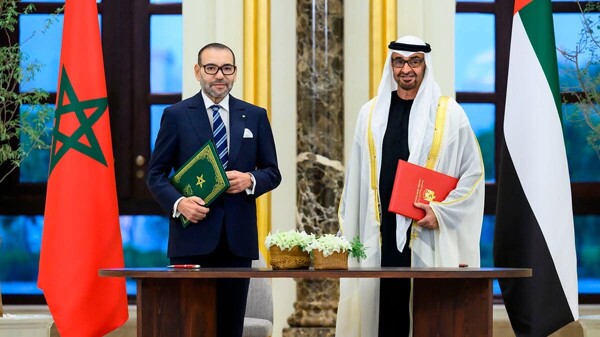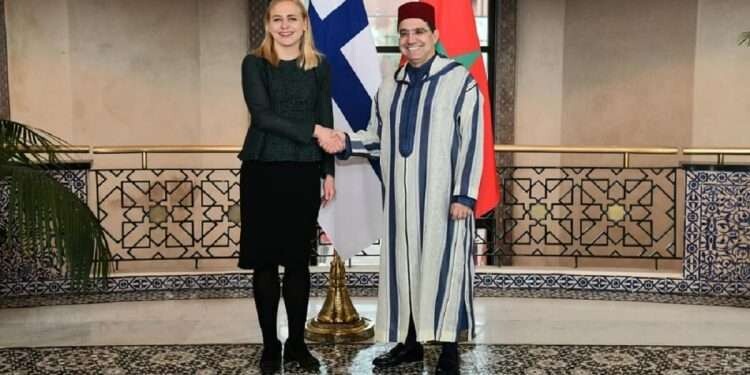
The plan proposes to grant the territory broad political and administrative powers—including a regional parliament and economic management capacity—under Moroccan sovereignty. Over the years, an increasing number of countries have considered this formula as the most pragmatic way to resolve a conflict that has been deadlocked for half a century. The Shift in the International Climate The accumulation of international backing has been notable in the last decade. In a new sign of this changing trend, Finland and Belgium have reaffirmed in recent days their support for the autonomy plan presented by Morocco, which provides for self-government for the territory under Moroccan sovereignty. These positions, expressed following separate diplomatic meetings in Rabat, are part of a broader dynamic of international support that Morocco has been accumulating over the last decade. Finland also reaffirmed its support for the plan presented by Morocco, considering it a serious and credible basis for achieving a final and mutually acceptable political solution. The joint statement issued after the meeting also underscored the support of both countries for the United Nations' efforts to find a negotiated solution to the conflict. Several Western countries, as well as numerous African and Arab states, have expressed their support for the Moroccan initiative. In parallel, more than twenty countries have opened consulates in the cities of Dakhla and Laayoune, a diplomatic gesture that Rabat interprets as de facto recognition of its administration over the territory. The support of European countries like Finland and Belgium is particularly significant because it reinforces the trend within the European Union towards a more pragmatic view of the conflict. The Sahara as the Axis of Moroccan Diplomacy For Morocco, the Sahara issue is not merely a matter of foreign policy. For many observers, this shift reflects the result of a sustained strategy from the Royal Palace by King Mohammed VI, who has made the Sahara issue the central axis of the country's foreign policy. Finland Joins European Support The most recent support comes from Elina Valtonen, who during an official visit to Rabat expressed her country's backing for the Moroccan initiative. After meeting with Moroccan Foreign Minister Nasser Bourita, Finnish diplomacy stated that "true autonomy under Moroccan sovereignty could constitute the most feasible solution" to resolve the conflict. As explained by Prévot, his government plans to act accordingly on the diplomatic and economic fronts, which could translate into increased cooperation and investment in the southern provinces administered by Morocco. Among the planned measures is a future visit by the Belgian ambassador to the Sahara region to prepare economic initiatives, including business missions and trade fairs organized by regional development agencies. Belgium also reiterated that its general consulate in Rabat has jurisdiction over all Moroccan territory without regional distinction, including the Sahara region, a diplomatic signal that Rabat interprets as an implicit recognition of its sovereignty. A Long-Term Diplomatic Strategy The new European support does not occur in a vacuum. In practice, Finland's position aligns with that of several Western countries that in recent years have considered the autonomy proposal as the most realistic option to close the conflict. Belgium Strengthens Its Position and Announces Concrete Measures A few hours after the Finnish statement, Rabat received another important diplomatic boost from Brussels. Rabat considers it a matter of territorial integrity and national unity, a principle reiterated by Moroccan authorities at every diplomatic meeting. This approach explains why the kingdom has made the defense of its sovereignty over the territory the central axis of its international action. In this context, the recent endorsements from Helsinki and Brussels are interpreted in Rabat as a new confirmation that the country's diplomatic strategy is bearing fruit. As the number of countries considering the Autonomy Plan as the most viable solution grows, Morocco seeks to consolidate a new political reality around the Sahara: one where the resolution of the conflict, according to the kingdom's diplomatic narrative, inevitably involves recognizing Moroccan sovereignty over the entirety of its territory.