Since the UN Security Council approved Resolution 2797, which consolidates the autonomy plan proposed by Rabat as the most "serious and credible" basis for resolving the Western Sahara dispute, the Kingdom's Ministry of Foreign Affairs has launched a diplomatic offensive to secure these achievements on the international stage and prevent setbacks.
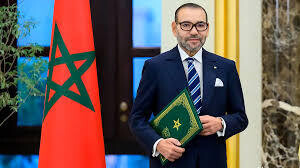
According to diplomatic sources in Rabat, the strategy follows "the strategic guidelines imparted by His Majesty King Mohammed VI," whose speech set a clear agenda: to isolate positions contrary to the international recognition of the autonomy plan, expand the network of support in Africa, Europe, and the Arab world, and translate that political backing into economic, security, and cooperation alliances.
In just one week, Morocco sealed significant advances in Burkina Faso and the Netherlands, two countries with influence in the African Union and the European Union, respectively. Both have adopted much more explicit positions in favor of Morocco's proposal for Western Sahara, underlining—using unusually direct diplomatic language—the legitimacy of the autonomy plan and the centrality of Rabat in the regional security architecture.
Burkina Faso: "firm and constant" support for Morocco's sovereignty over the Sahara
The first signal of this new phase came from Ouagadougou. Among the key outcomes was a security cooperation treaty, which is central for a country—Burkina Faso—deeply engaged in a fierce fight against jihadist terrorism.
"The meeting underscores the solidity and depth of the ties between our countries, based on fraternity, mutual respect, and fruitful cooperation," stated Bourita, who emphasized Morocco's solidarity with the Sahel authorities in their fight against violent extremism.
For Ouagadougou, as expressed by Traoré, Morocco's involvement "reinforces the conviction that our consultations must continue in international forums" and consolidates Rabat as one of the region's most reliable partners.
The Netherlands: A European shift towards autonomy under Moroccan sovereignty
Five days after the African meeting, Moroccan diplomacy secured another major support, this time in Europe.
This is part of a plan outlined from the Royal Palace following the approval of Resolution 2797, whose text internationally solidified the political framework defended by Rabat.
The Ministry of Foreign Affairs has intensified: bilateral visits in West Africa, contacts with reluctant or ambiguous European countries, coordination with Gulf allies, and the mobilization of diplomatic missions in multilateral organizations.
The objective, according to a Moroccan official who requested anonymity, is "to translate each political support into a diplomatic accomplished fact": new consulates in the southern provinces, explicit joint statements, economic agreements tied to territorial stability, and the expansion of recognition for the autonomy plan.
A key moment for Rabat
For Morocco, the combination of explicit support from Burkina Faso and the Netherlands holds symbolic and strategic value: one comes from the heart of the Sahel, a region where Rabat aims to consolidate itself as a security actor, and the other from Western Europe, where it seeks to build a network of partners aligned with its vision of the Sahara.
The diplomatic offensive will continue in the coming weeks.
In The Hague, Nasser Bourita met with Dutch Minister for Foreign Affairs and Asylum and Migration, David van Weel, with whom he adopted a joint statement that marks a notable shift in the Netherlands' historical position.
The document affirms that "true autonomy under Moroccan sovereignty is the most viable solution to definitively end the regional dispute over the Sahara."
The phrase, of a uncommon firmness in European diplomacy, reflects a growing alignment of the EU with the position defended by Rabat since 2007.
The statement emphasizes that this position is part of "the international dynamic driven by His Majesty King Mohammed VI," who has made the Sahara issue the central axis of Moroccan foreign policy over the last decade.
The Netherlands also welcomed Resolution 2797 and expressed its full support for the efforts of the UN Secretary-General and his Personal Envoy to facilitate negotiations "based on Morocco's Autonomy Initiative," with the aim of achieving a "just, lasting, and mutually acceptable" solution.
This support, according to consulted European diplomats, comes in a context of geopolitical realignment where the stability of the Maghreb and the Sahel has become a strategic priority for the EU.
"The Sahara is not just another file: it is the absolute priority of our foreign policy."
There, Morocco's Minister of Foreign Affairs, Nasser Bourita, and his Burkinabè counterpart, Karamoko Jean Marie Traoré, co-chaired the 5th Session of the Joint Cooperation Commission, which concluded with a joint communiqué of unusual political clarity.
Burkina Faso, a key country in the Alliance of Sahel States, reiterated its "firm and constant support for the territorial integrity and sovereignty of Morocco over all its territory, including the Sahara region." The Burkinabè government also hailed Resolution 2797, calling it "historic" for "enshrining Morocco's autonomy plan."
In subsequent statements, Traoré insisted that the Kingdom's "autonomy plan" constitutes "the only serious, credible, and lasting basis" to resolve the conflict, highlighting the "growing international consensus driven by His Majesty King Mohammed VI" around this proposal.
Bourita publicly thanked Burkina Faso's "unconditional" support in regional and international forums, recalling that this country already opened a Consulate General in Dakhla in 2020, a diplomatic gesture of the highest magnitude that only the firmest allies have taken.
The visit culminated in the signing of 12 cooperation agreements, covering everything from security and civil protection to agriculture, trade, housing, urban planning, and vocational training.
Moroccan sources confirm that new high-level visits to Africa and the Middle East are being prepared, as well as an intensification of contacts with Latin American countries that have shown openness to reviewing their stance.
The compass is clear and has been set from the highest level of the state: to defend national sovereignty, consolidate the international consensus on autonomy, and turn Resolution 2797 into a point of no return.
In the words of a diplomat from the Kingdom: "Morocco's strategy is patient, constant, and guided by King Mohammed VI's long-term vision. The diplomacy of the Kingdom of Morocco, chaining supports in Africa and Europe, guided by the high strategic guidelines of Mohammed VI".