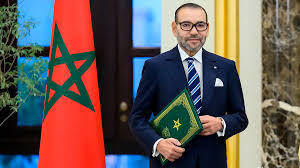
The invitation extended by the President of the United States, Donald Trump, to the King of Morocco, Mohammed VI, to join as a founding member of the new Gaza Peace Council is not merely a protocolary gesture or a diplomatic courtesy. This dual legitimacy—political and spiritual—grants Morocco a unique position as an interlocutor between the West, the Arab world, and moderate Sunni Islam, a diplomatic capital that Washington considers key for any attempt at stabilizing Gaza. The creation of the Gaza Peace Council also fits into the second phase of Trump's overall plan for the Middle East, which includes the launch of a National Committee for the Administration of Gaza as a transitional structure. In this context, the invitation extended to the President of Argentina, Javier Milei, stands out, as his presence underscores the U.S. intention to give the body a global, not just regional, projection. Mohammed VI's acceptance finally reinforces the narrative of Morocco as a peace actor. The Gaza Peace Council also reflects Trump's desire to articulate a restricted directorate of leaders with real decision-making power. This is a decision laden with political, religious, and strategic symbolism, confirming the singular role the Alaouite monarch plays in the Middle Eastern balance of power and in the alliance architecture that Washington is trying to rebuild in a region devastated by war and distrust. The Moroccan government confirmed that Mohammed VI responded favorably to the invitation and that the Kingdom will proceed to ratify the Constitutive Charter of the Council, an initiative directly promoted by the White House with the declared ambition to contribute to peace efforts in the Middle East and to test a new approach to conflict resolution on a global scale. In the 21st century, this alliance has translated into military cooperation, security agreements, economic exchanges, and constant political coordination in the Maghreb and the Sahel. During Trump's first term, this relationship reached a turning point with the U.S. decision to recognize Morocco's full sovereignty over Western Sahara, becoming the first country to do so explicitly. The Alaouite monarch's incorporation, Commander of the Faithful and head of the Al-Quds Committee, into the Trump administration's initiative highlights the political and religious weight of Rabat in the Middle East and solidifies a historic relationship with Washington marked by strategic cooperation and U.S. recognition of Moroccan sovereignty over Western Sahara. The profile of the Moroccan monarch explains this choice to a large extent. Both countries maintain one of the oldest diplomatic ties in the world: Morocco was the first state to recognize U.S. independence in 1777, and since then, the relationship has weathered monarchies, republics, world wars, and profound geopolitical transformations without losing continuity. Mohammed VI's participation as a founding member does not guarantee the initiative's success, but it does bring a legitimacy that is difficult to replicate and confirms that, in the complex equation of Gaza, Morocco once again occupies a central place. Rabat reiterated its commitment to a just, comprehensive, and lasting solution to the Middle East conflict, based on the creation of a Palestinian state within the 1967 borders, with East Jerusalem as its capital, living in peace with Israel. Added to this is his presidency of the Al-Quds Committee, a permanent body of the Organization of Islamic Cooperation responsible for defending the status of Jerusalem and the rights of the Palestinian people. According to the known statutes, the new body aspires to constitute itself as an international organization capable of promoting stability, restoring governance, and ensuring lasting peace in areas affected or threatened by conflicts, relying on practical cooperation and partnerships oriented towards concrete results, rather than limited-scope multilateral declarations. The relationship between the United States and Morocco provides the historical backdrop for this initiative. Among the invited heads of state and government are leaders with very diverse ideological profiles, from traditional powers to emerging actors. Mohammed VI is not just a head of state: in his capacity as Commander of the Faithful, he embodies a religious authority recognized beyond Morocco's borders.