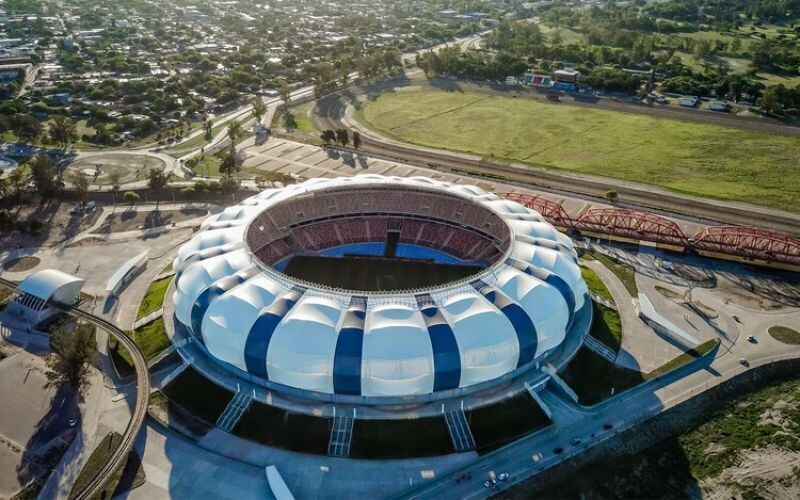
Morocco, along with Spain and Portugal, will co-host the football tournament, for which the Grand Stadium Hassan II will play a key role as the largest in the world. Located near Casablanca, this majestic stadium will have a capacity for 115,000 spectators, surpassing iconic venues such as the Rungrado 1st of May Stadium in North Korea and Camp Nou in Barcelona.
According to statements from the organizers, beyond the World Cup, the Grand Stadium Hassan II will offer a space for sporting events, concerts, and conventions, becoming a global epicenter of entertainment. With an innovative and multifunctional design, this stadium is expected to become a new cathedral of football and an icon of 21st-century sports architecture.
The stadium design is led by the architecture firms Oualalou + Choi and Populous, who have collaborated to create a venue unique in its style and functionality. In terms of spectator capacity, the list of the five largest football stadiums in the world highlights the Grand Stadium Hassan II as the leader with its 115,000 seats.
The construction process of the world's largest stadium in Morocco represents a milestone in the history of sports architecture, meeting modern and technological standards. Inspired by the traditional Moroccan tent "moussem," the stadium will feature an aluminum roof that extends beyond the main structure, integrating access points and green areas into a harmonious and modern environment.
Among the standout features of the stadium are its capacity for 115,000 spectators, its design inspired by the Moroccan tent, the aluminum roof extending beyond the venue, the implementation of advanced technology, the presence of hotels, shopping centers, and green areas, as well as its proximity to a high-speed train station.
Construction of the world's largest stadium is expected to be completed in 2028, aiming to become one of the main venues for the FIFA World Cup in 2030.