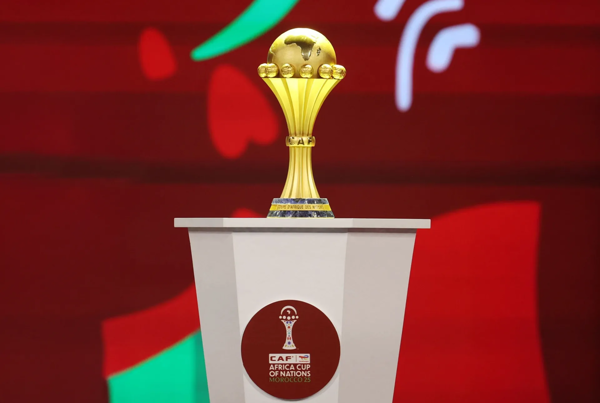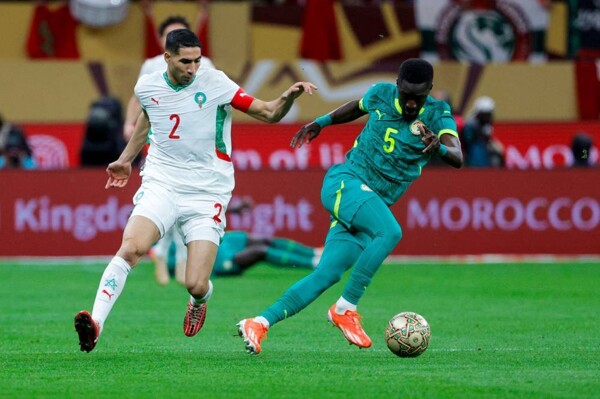
The 2025 Africa Cup of Nations (AFCON) was for Morocco much more than a sporting competition. The organization of this tournament served as a general rehearsal for the security measures the country plans to implement for the 2030 FIFA World Cup, which it will co-host with Spain and Portugal. This unprecedented deployment involved specialized units —K-9 brigades, cavalry corps, reinforced urban patrols— and, for the first time on this scale, systematic drone coverage, enabling continuous aerial surveillance over stadiums, mass gathering areas, and transport axes. Logistics accompanied this deployment. It functioned as a comprehensive demonstration of state capability, an exercise in strategic planning, and a showcase for the model of security and governance that Morocco aims to project globally for the 2030 World Cup. Moroccan authorities conceived AFCON as a realistic testing ground: a high-media-exposure event with massive public flows and international delegations, with demands comparable to those of a World Cup. The historic performance of the national team at the 2022 World Cup in Qatar, the organization of AFCON 2025, and its designation as host of the 2030 World Cup are all part of the same logic: positioning Morocco as a reliable bridge between Africa, Europe, and the Arab world. The Africa Cup of Nations confirmed that ambition. Advanced technology, international cooperation, and a sports diplomacy strategy driven directly by His Majesty King Mohammed VI support Morocco's ambition to consolidate itself as a central actor in 21st-century football and geopolitics. Behind the popular fervor, the packed stadiums, and the impeccable logistics visible to millions of viewers, was deployed a security network of unprecedented sophistication on the African continent. From the start of the tournament, normality in the streets of Casablanca, Rabat, Marrakech, or Tangier was not the result of improvisation, but of prolonged and deliberate preparation. For the tournament, an African Police Cooperation Center was activated, bringing together the security services of participating countries, officials from CAF and FIFA, and liaisons from international organizations. In an international context marked by uncertainty and distrust, Morocco projected an image of stability, predictability, and state competence. The directive was clear: anticipate risks, integrate technology, and reinforce international cooperation. The heart of the operation was the coordination between the General Directorate of National Security (DGSN) and the General Directorate of Territorial Surveillance (DGST), under a centralized command that reflected a doctrine of strict control and direct supervision. Security was conceived as an invisible layer, designed to ensure the show without interfering with the fan experience. The human factor was also decisive. The goal was not only to prevent crime but also to avoid logistical incidents that could tarnish the country's image. Stadiums were transformed into comprehensive security spaces. Cooperation with Interpol played a central role, both in information sharing and in preventing transnational threats associated with major sporting events. It was a popular, organizational, diplomatic, and media success. In this context, security—discreet, effective, and highly professionalized—has become one of its main assets. This aspect is key for 2030, when the volume of visitors will be far greater than during AFCON. One of the most notable features of the operation was its international dimension. The DGSN accelerated a process that goes beyond AFCON: infrastructure renewal, protocol updates, and massive investment in surveillance and real-time analysis systems. An expanded fleet of police vehicles, equipped with advanced communication systems, reinforced territorial presence. The main host cities were covered by an extensive network of smart cameras, integrated into command centers capable of monitoring people flows, detecting anomalous behavior, and managing crowds with predictive criteria. The personal involvement of Abdellatif Hammouchi, head of both agencies, symbolized this commitment to minimizing margins of error in a context of maximum international visibility. The pre-tournament modernization was profound and structural. Thousands of agents were mobilized, including several thousand new personnel specifically trained in managing large gatherings, attending to international audiences, and de-escalation techniques. Even the visual identity of some of these forces incorporated the Amazigh language, a symbolic gesture that combined institutional modernization and cultural recognition, in line with the narrative of an inclusive and contemporary state. Control also began long before the initial whistle. At airports and borders, Morocco generalized the use of E-GATE biometric systems, designed to expedite the entry of foreign fans without relaxing security standards. Each stadium had permanent police stations, inter-institutional coordination rooms, and access control devices combining physical inspections and advanced electronic systems.