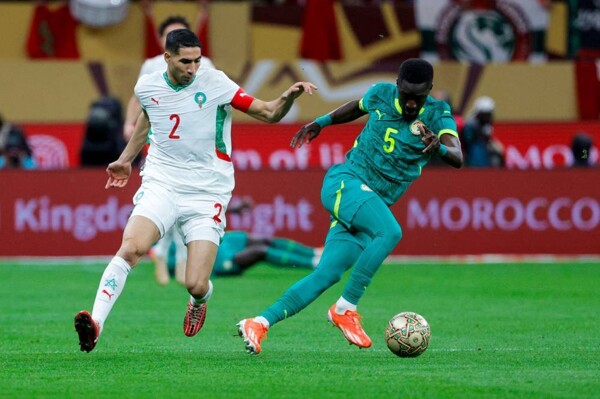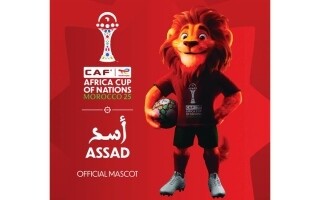
The nicknames of the 24 teams participating in the 2025 Africa Cup of Nations in Morocco reflect the cultural and geographical diversity of the 'Black Continent.' In Africa, a team's nickname is not just a cheer, but a declaration of national identity—a close link between ancient history, natural resources, and societal values that distinguish every people.The official website of the International Olympic Committee highlighted the nicknames of the teams participating in the Africa Cup of Nations, where symbols of the forest and physical strength have been overwhelmingly dominant. Wild creatures are the symbols for 18 teams, a trend that reflects a strong connection to the natural environment. 'Lions' lead among these symbols. The Moroccan team is known as the 'Atlas Lions' after the lion subspecies that once inhabited the Atlas Mountains. The Cameroonian team bears the name 'Indomitable Lions,' an official title adopted in the early 1970s by presidential decree to boost the team's fighting spirit. In Senegal, the team is known as the 'Lions of Teranga,' where the word 'Teranga' in the local Wolof language combines strength with the societal value of hospitality.Symbols are not limited to predators only. They extend to include the 'Elephants' of Côte d'Ivoire, a nickname derived from the country's historic ivory trade, and the 'Eagles' that soar over the skies of Tunisia (Carthage Eagles), Mali, and Nigeria.The nickname of the Nigerian team changed from the 'Green Eagles' to the 'Super Eagles' after the team secured second place in the 1988 edition of the continental tournament, in an official effort to impart a sense of superiority and dominance over the team's performance.Some nicknames serve as geographical and mineralogical documents. The Zambian team is famous as the 'Copper Bullets,' a name that directly points to the country's primary economic resource, as Zambia is one of the world's largest copper producers.In Tanzania, the team's nickname is the 'Stars of the Umma,' as the word 'Umma' in Swahili means 'nation,' directly linking the team to national unity. Sudan, for its part, draws its nickname 'Nile Crocodiles' from the river that represents the country's lifeblood. The Comoros stand out with the nickname 'Coelacanth,' a rare type of fish once thought to be extinct for millions of years before its discovery in the archipelago's waters, reflecting the unique marine nature of the state.Other nicknames are tied to civilizational roots. The Egyptian team's nickname 'Pharaohs' represents the strongest link to ancient Egyptian civilization. The Tunisian team evokes the legacy of the Carthaginian Empire, which was a center of power in the Mediterranean. In Zimbabwe, the nickname 'Warriors' reflects the historical spirit of resistance of the indigenous people.In 2022, the Benin decided to drop its nickname 'Squirrels' after decades of use, transitioning to 'Cheetahs' in a move aimed at changing the team's image from a small animal to a formidable predator, in an effort to improve its technical results.Similarly, the commercial and legal value of nicknames is evident in the case of South Africa, where the local association had to engage in lengthy legal battles and pay substantial sums to secure the trademark for the name 'Bafana Bafana' (The Boys), after the term evolved from a post-apartheid cheer into a multi-million dollar brand.These nicknames in the 2025 Africa Cup of Nations do not just serve a sporting function; they act as a cultural bridge, connecting the global fan with the forgotten stories and deep backgrounds of each nation, making every match a struggle of historical and natural identities that transcend the green rectangle.