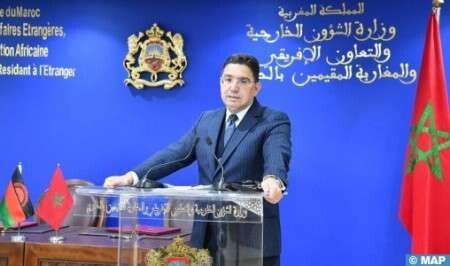
In the context of the seventh joint commission between Oman and Morocco, the Minister of Foreign Affairs of the Sultanate, Badr Bin Hamad Al Busaidi, announced from Rabat that Muscat recognizes Morocco's sovereignty over the Sahara, considering the autonomy plan as a serious and realistic basis for the definitive resolution of the conflict.
The Proposal for a Plan for Negotiation of an Autonomy Statute for the Sahara Region, presented by Rabat to the United Nations in 2007, continues to receive international support in a context of increasing isolation of Algeria. Under an international offensive by King Mohammed VI, the autonomy plan presented in 2007 gains ground as a viable alternative for resolving the conflict in the Sahara.
The battle for the Sahara shifts to the consulates in Laayoune or Dakhla, showing a change in the political map of the Maghreb. Morocco promotes its Autonomy Plan as a peaceful solution, based on commitment and dialogue, to resolve the conflict in the region.
The plan proposes that the Sahrawis manage their own affairs in areas such as economy, culture, and social development, while Morocco would handle defense and foreign relations. Several international actors have praised this proposal as a serious and realistic solution.
The backing of countries such as the United Arab Emirates, Jordan, and Comoros, which have opened consulates in Dakhla and Laayoune, reinforces the perception of the viability of Morocco's Autonomy Plan. This diplomatic strategy has been supported by Western powers such as Spain, France, the United States, and the United Kingdom, which have expressed their continued support for the Moroccan proposal.
In a context of increasing international support for the Moroccan proposal, Algeria finds itself in a position of diplomatic isolation due to the growing backing for the autonomy plan presented in 2007 by Morocco. Eastern European states such as Hungary, Croatia, Moldova, and Estonia have shown their support for the Moroccan autonomy plan proposal, thus consolidating the position of the Maghreb Kingdom on the international scene.
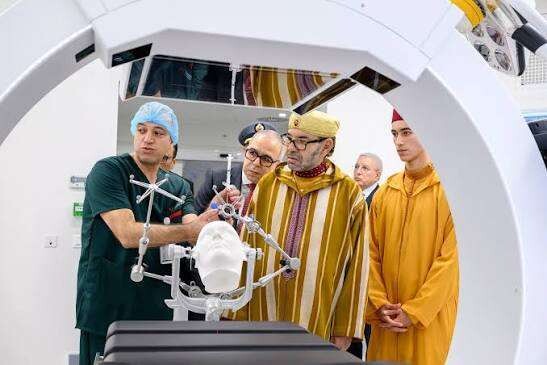
The figure of King Mohammed VI has been fundamental in the diplomatic architecture of Morocco, which has managed to position its proposal as the most serious, credible, and realistic basis for resolving the conflict in the Sahara.