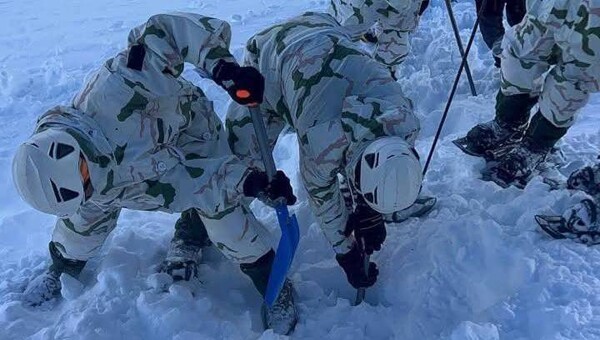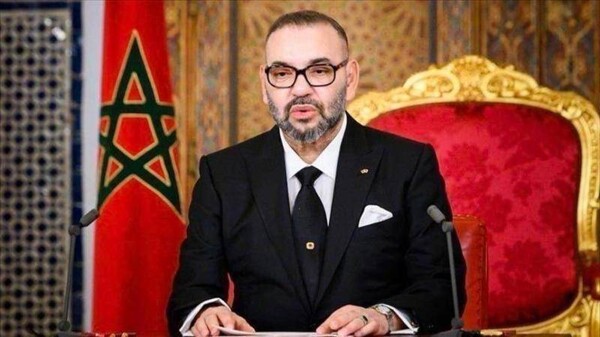
The High Directives of King Mohammed VI have turned winter into a test of the state's ability to protect its citizens, especially those living on the geographical and social margins of the country. In a global context of increasing climate vulnerability, Morocco is thus testing a response that combines political authority, territorial presence, and social action, with the ambition that the rigor of the cold will not translate into abandonment or oblivion. Waves of intense cold, exceptional precipitation, and heavy snowfall in mountainous areas have forced the Kingdom to deploy a state response combining preparedness, social assistance, and reinforced territorial presence, with a clear objective: to protect the most exposed populations and prevent climatic adversity from turning into a humanitarian crisis. The epicenter of this strategy is the National Plan to Combat the Effects of Cold Waves for the 2025-2026 winter season, launched in accordance with the Royal High Instructions and coordinated by the Ministry of the Interior. The plan affects 28 provinces and prefectures, many of them located in the High and Middle Atlas, where geographical conditions and the dispersion of settlements multiply the vulnerability of rural communities. An Unprecedented Mobilization The Ministry of the Interior activated its national pilotage and surveillance center, while ordering the creation and operation of provincial monitoring committees, responsible for supervising in real-time the evolution of the meteorological situation and coordinating responses on the ground. Of national scope, the operation will benefit 73,000 vulnerable households, which will receive basic foodstuffs and blankets, with priority given to the most exposed families to climatic hazards. The logistical deployment is also considerable. The provision of fodder to protect livestock, a key element for the subsistence of many rural families, has also been planned. The continuity of road and telephone links is among the priorities of the plan, in a context where meteorological disturbances have already caused tragedies, such as the floods in the province of Safi, which caused dozens of deaths and highlighted the violence of the climatic phenomena affecting the country. A Call for Caution Aware that no preventive policy is effective without citizen collaboration, the Ministry of the Interior has urged the population to be extremely vigilant, follow safety instructions, and avoid unnecessary travel on roads susceptible to being cut off. By Adalberto Agozino The harsh climatic conditions hitting the territory of Morocco have raised the concern of King Mohammed VI, who is always attentive to the needs of all Moroccans, and who has issued strict directives to mitigate the climate impact. Content: By direct order of His Majesty King Mohammed VI, Morocco has activated in recent weeks a broad institutional, logistical, and humanitarian device aimed at mitigating the effects of one of the most severe winter seasons in recent years. The goal is to reach even the most remote nuclei, where geographical isolation turns every winter into an existential challenge. Infrastructure, livestock, and communications The state response is not limited to food aid. Walis and governors received precise instructions to reinforce surveillance, anticipate risks, and adopt preventive measures capable of limiting human and material damage, in line with the guidelines set from the Palace. The strategy is based on a thorough update of field data, the expansion of the intervention area, and the diversification of means of action, with special attention to isolated villages (douars) and high-altitude areas, where snow can exceed 80 centimeters and cut off access for entire days. Operation "Big Cold": Solidarity as State Policy Parallel to the government's action, the Mohammed V Foundation for Solidarity, by Royal High Instructions, launched the "Big Cold" operation, conceived as an emergency humanitarian response to the sharp drop in temperatures. Teams made up of medical personnel, social workers, and staff from the General Directorate of Social Services of the Royal Armed Forces are working on the ground in close coordination with local authorities, the Royal Armed Forces, and the Royal Gendarmerie. The General Directorate of Meteorology, for its part, recommends periodically following the bulletins in a period marked by exceptional atmospheric instability. Winter as a Governance Test Beyond the climatic situation, the articulated response by Morocco highlights a governance model in which anticipation, inter-institutional coordination, and solidarity are central axes. The device includes the regular supply of essential goods and heating materials, the preventive deployment of logistical means near road axes susceptible to being blocked, and the guarantee of immediate intervention in critical situations.