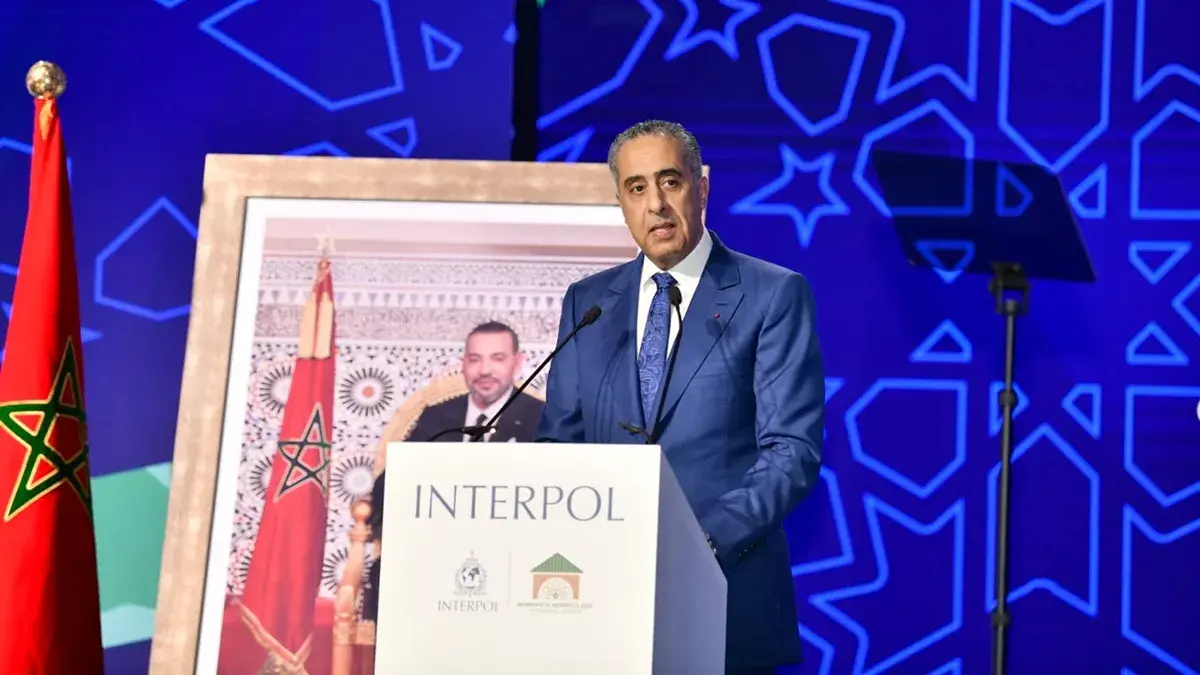
Morocco is solidifying its role as a key player in global security, as evidenced by the holding of the 93rd INTERPOL General Assembly in Marrakech. The country's strategy, under the leadership of King Mohammed VI, has moved beyond the traditional approach focused solely on crime fighting, transforming security forces into active participants in national development.
Morocco is today one of the pillars of security in the Mediterranean and the Sahel. The country plays a central role in exchanging information on routes, intermediary groups, and links between Latin American cartels and African networks. Moroccan forces have reinforced ports and borders, deployed new scanning systems in major cities, and expanded cooperation with Spain, Portugal, and France to intercept shipments before they reach the Mediterranean.
Morocco also plays a crucial role in joint investigations with Spain, France, and the United States regarding individuals returning from combat zones in Syria and Iraq. This security diplomacy has been internationally recognized. The country's ability to organize an event of this scale, its growing influence in global security decision-making, and the explicit recognition of major world agencies consolidate its position as an indispensable partner.
At the heart of these efforts is Abdellatif Hammouchi, Director General of National Security (DGSN) and the General Directorate of Territorial Surveillance (DGST), who is the main executor of the monarch's strategic vision. His information is described as reliable, rapid, and decisive.
This success is not accidental. Unlike other countries, Morocco's security strategy focuses on early detection, individualized tracking of radicalized individuals, and the neutralization of cells before they achieve operational capabilities. This policy is based on clear political directives from King Mohammed VI, who since the 2003 Casablanca attacks has made security and internal stability a matter of state.
Under Hammouchi's leadership, Morocco has implemented a dual strategy: technological reinforcement and systematic international coordination. Joint operations with Spain in the Strait of Gibraltar and at the borders of Ceuta and Melilla are considered by Brussels to be one of the pillars preventing a new continental migration crisis. Morocco's efforts are not limited to physical control; they include regularization campaigns, combating human trafficking networks, and a sustained policy of cooperation with African countries of origin.
At a time marked by the multiplication of regional conflicts, the expansion of jihadist terrorism, the rise of transnational criminal networks, and increasingly complex irregular migrations, the Marrakech meeting acquired a particularly critical dimension. For four days, between November 24 and 27, experts and ministers debated how to enhance the interoperability of police databases, accelerate the biometric identification of suspects at borders, combat the online sexual exploitation of children, and curb the expansion of drug trafficking through West Africa, which has become the new highway for cocaine to Europe.
In this context, the figure of Hammouchi emerged as one of the most respected and gravitating personalities of the assembly. Delegations from Europe, the United States, West Africa, and multilateral organizations highlighted Rabat's role as a "reliable and structural partner" in the fight against terrorism and organized crime. Expressions of particular praise were given for the professionalism of Moroccan services, the quality of their analysts, and their constant willingness to share critical information in real time.
Diplomats present in Marrakech stated that on several occasions, warnings from the DGST prevented attacks on European soil. Meanwhile, Mohamed Ben Ali Koman, Secretary General of the Council of Arab Interior Ministers, highlighted the "remarkable transformation of the Moroccan security system".
Thus, the 93rd INTERPOL General Assembly in Marrakech has shown a Morocco in full international affirmation. The Assembly may be over, but it leaves one certainty established: on the chessboard of international security, Morocco is no longer a peripheral actor but a central piece. It is there that the organization's major strategic orientations are defined, binding resolutions are approved, and the authorities that will oversee international police coordination are elected.