


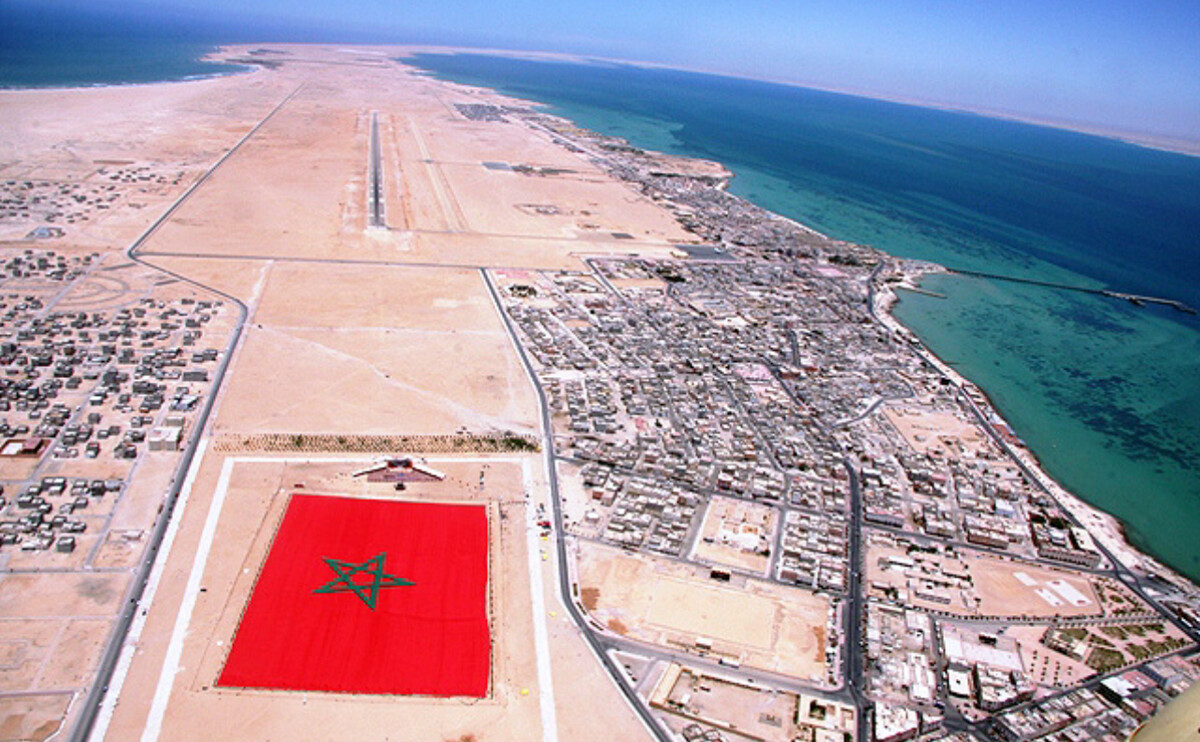
This Wednesday, it was the turn of a group of American businessmen from Great Neck, who, during meetings with local authorities and field visits, confirmed what various international bodies have already pointed out: the Moroccan Sahara has become a magnet for global investments. The American delegation, composed of figures from the health, technology, agribusiness, and logistics sectors, visited the Atlantic port of Dakhla, agricultural operations, aquaculture projects, and several emerging industrial units.
Conceived as a continental logistics hub, it will link Atlantic trade with the Sahel and West Africa, optimizing the flow of goods in a strategic area near major international maritime routes. Moroccan authorities are betting that this port will become a key link in the so-called "blue economy," with the potential to attract fish processing industries, re-export platforms, and advanced logistics centers.
For the American investors who visited its facilities, the project demonstrates—according to the director of the Dakhla CRI, Ahmed Ktir—"a region in full metamorphosis, with infrastructure on par with major African poles."
Tourism: an emerging oasis between desert and ocean If the port represents the great logistical promise of the Sahara, tourism constitutes another of its already operational engines. The words of the AMDIE director at the MD Sahara Forum summarize the spirit of this national bet: "A clear vision with applied governance allows this zone to fully take advantage of the opportunities presented to it to have a bright future."
With a port under construction, a booming tourism sector, a robust fishing industry, a strategic mining potential, and a growing flow of foreign delegations, Dakhla and the southern provinces are consolidating themselves as an economic node called upon to play a central role in Morocco's African and Atlantic projection. And all this, local sources underline, is the fruit of a long-term strategy driven by King Mohammed VI, which has placed the Moroccan Sahara at the center of its national development and continental projection policy.
Meetings with the Wali (governor) of Dakhla-Oued Eddahab, the president of the Municipal Council, and the regional representation of CGEM consolidated the idea that there are favorable conditions for joint projects in agribusiness, health, logistics, and renewable energies.
A future being built today The Moroccan Sahara faces the coming years with a clear roadmap: to become one of the great economic poles of West Africa. For analysts, it is part of the modernization and international projection project driven by His Majesty King Mohammed VI, who for two decades has conceived the southern provinces as a strategic axis of connection between the Maghreb, West Africa, and the Atlantic.
At the recently held MD Sahara 2025 Forum in Dakhla, the General Director of the Moroccan Agency for Investment and Export Development (AMDIE), Ali Seddiki, described the region as a "new frontier for African and world investment." The Saharan continental platform hosts abundant sardine, octopus, and hake resources, which feed a growing local processing industry.
In recent years, Morocco has promoted large-scale aquaculture projects—such as those visited by the American delegation—in an attempt to diversify its blue economy, generate jobs, and increase the added value of its exports. Regional authorities are now seeking to diversify this model with the incorporation of sports tourism, ecotourism, and nature-linked thermal projects.
For foreign businessmen, this activity is not only attractive from an economic point of view but also acts as a gateway for new investments in services, hospitality, transport, and sustainable energy.
Fishing and aquaculture: a strategic resource Another of the key attractions is the region's fishing potential, one of the richest on the African Atlantic. According to Seddiki, the Moroccan Sahara is already the heart of the kingdom's new economy: decarbonized, oriented towards sustainable development, and backed by modern infrastructure connecting it to the rest of the world.
In his speech, Seddiki underlined a key point to understand the current investment boom: "We are facing a complete ecosystem that is positioning itself based on a high-quality, strategic, renewable resource," he explained, highlighting the existence of a 1,600-hectare industrial area prepared to receive logistics, energy, and manufacturing investments.
A port set to transform the African Atlantic The Atlantic port of Dakhla, whose launch is scheduled for 2028, is considered by Rabat the cornerstone of regional development. The recent visit of American businessmen to Dakhla confirms the growing attractiveness of the southern provinces, in a process encouraged by the strategic vision of King Mohammed VI.
The scene repeats itself more and more frequently: foreign delegations disembarking in Dakhla to take the pulse of a region that Morocco has turned into one of Africa's most dynamic laboratories for investment, logistics, tourism, and clean energy. The phosphate operations in the southern provinces play an increasingly important role in the global strategy of the state-owned OCP group, which seeks to diversify its production and bring it closer to new port infrastructure to reduce logistics costs.
The increase in global fertilizer demand, driven by pressure on global food security, turns this sector into one of the most attractive for technological investments, industrial alliances, and advanced processing projects.
The United States looks south The visit by the Great Neck businessmen is part of a growing trend: the interest of American companies in settling in southern Morocco, attracted by its political stability, tax advantages, and open diplomatic relations between Rabat and Washington. Moroccan authorities highlighted that investors were able to "firsthand witness the dynamism of the development the region is experiencing." These initiatives have been identified as one of the most promising poles for partnerships with foreign capital.
Phosphates: the other treasure of the south The region also stands out for its relevance in phosphates, a resource in which Morocco is a world leader. The objective—according to American investor Lior Cohen—is "to develop joint projects and identify new investment opportunities," with the aspiration to establish lasting economic ties with local actors.
The trip is framed within the twinning agreement between Dakhla and Great Neck, designed to formalize stable and mutually beneficial economic partnerships. Dakhla has become in recent years one of the world capitals of kitesurfing, in addition to consolidating itself as an expanding luxury destination thanks to the combination of virgin beaches, a stable climate, and vast desert landscapes. The hotel offering has grown constantly, with Moroccan, Gulf, and European investments targeting the high-income segment. A mechanism that, according to the authorities, is beginning to bear its first fruits.
A carefully planned strategy This renewed economic dynamism is not the fruit of chance.